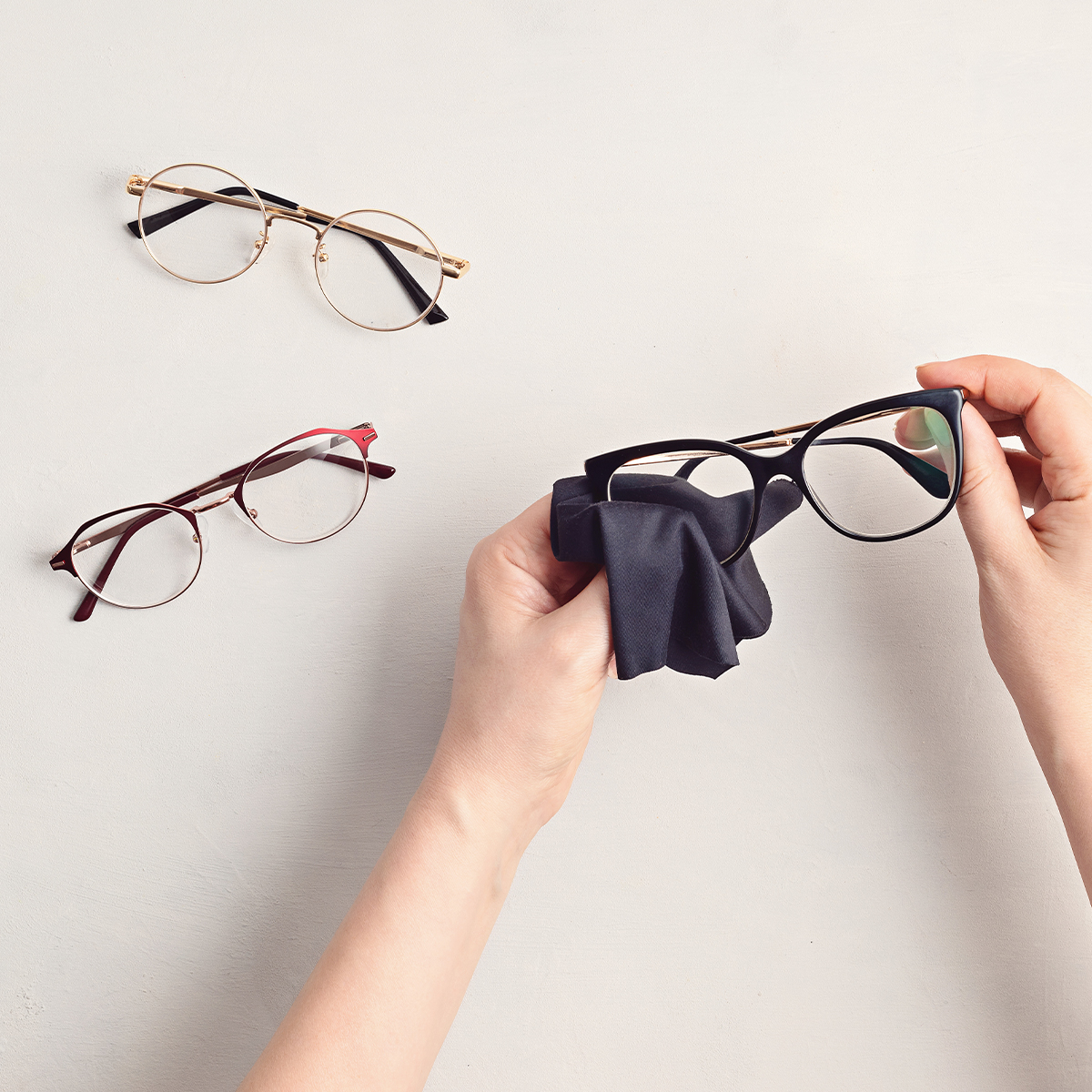
Once you have accepted that your eyes will not magically go back to focusing like they once did on their own, the next question is purely practical: which glasses for presbyopia should you buy? Preface: there is no single best pair, only the best pair for how you spend your day. Presbyopia glasses come in several types, each sharp at some things and frustrating at others, and the shop will often steer you toward whichever carries the best margin. So here is a clear buyer’s guide to the options, who each one suits, what to look for, and how they stack up, with the trade-offs spelled out. Note: if you are still weighing glasses against other routes, that is a bigger comparison covered elsewhere — Alternatives to progressive lenses lays out every correction option, Contact lenses for presbyopia: monovision vs multifocal digs into the contact-lens choice, and Presbyopia treatment: do eye drops, surgery, and LASIK actually work? covers drops, LASIK, and surgery. This guide assumes you have settled on glasses and want to make an educated choice.
The glasses types for presbyopia at a glance
Every pair of presbyopia glasses is doing the same basic job, adding back the close-up focusing power your lens started losing after your mid-40s. These solutions differ in how many distances they cover and what they cost you in field of view, looks, and money. There are five worth knowing.
Single-vision reading glasses
One magnifying power across the whole lens, sharp at reading distance. They are cheap, optically clean edge to edge, and need no adjustment period. The catch is in the name: everything past the page goes soft, so you peer over the top or take them on and off all day. Best for predictable close work at one distance.
Computer and office lenses
A close cousin of readers, but set for the arm’s-length zone where a monitor sits rather than the closer reading distance. They solve the specific complaint of people who spend the day at a screen and find ordinary readers too strong for that distance. They still blur far-away vision, so they are a workspace tool with a very limited area of effect, not an all-day pair.
Bifocals and trifocals
Benjamin Franklin’s ingenious idea, still useful: distance up top, near at the bottom, separated by a visible line, with a trifocal adding an intermediate strip. The zones are large and easy to find with no hunting for a sweet spot, which some people prefer, but the line is cosmetically obvious and the image jumps as your gaze crosses it.
Progressive lenses
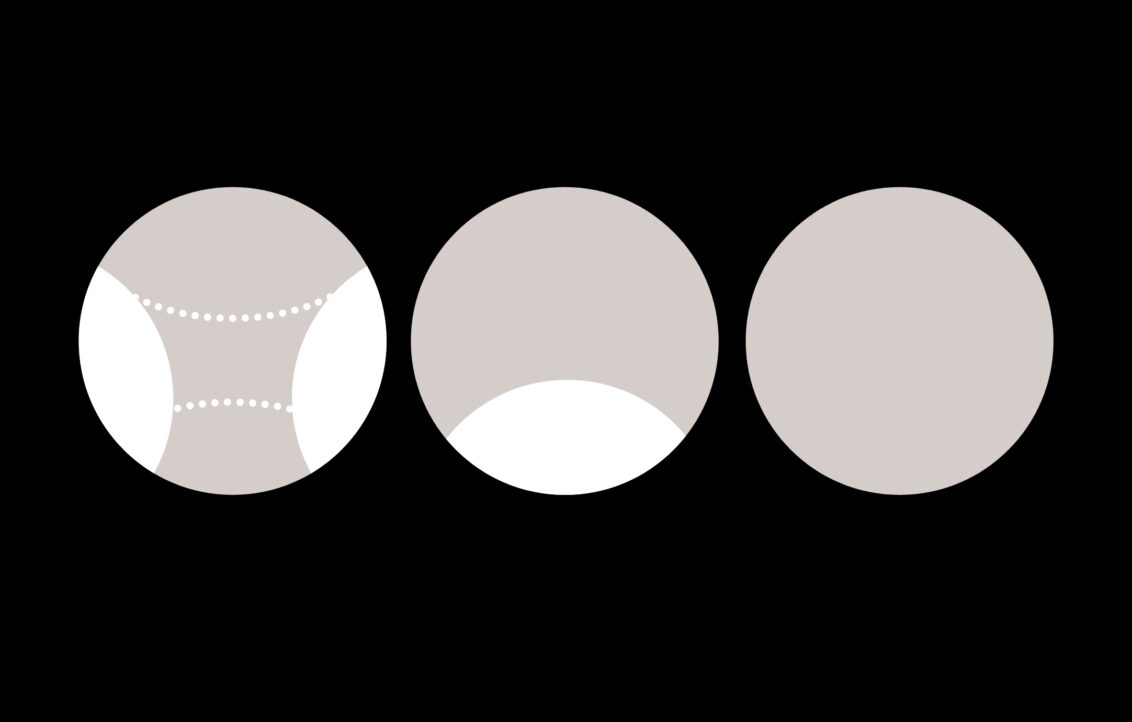
The most popular choice. Progressives smooth the bifocal zones into a seamless gradient with no visible line, so they look like ordinary glasses and cover every distance. The trade-off is optical: only a narrow vertical corridor is in focus at a time, the edges blur and swim, and most people need several weeks to adapt while a small share never do.[2] They are also the priciest of the conventional options.
Adaptive (autofocus) lenses
The newest entrant. Instead of fixed zones, adaptive lenses are designed to change their focusing power electronically so one pair stays sharp from near to far without a corridor to aim through. It is a promising direction as it would allow people to have a seamless single-vision lens experience at every distance without traditional trade-offs of progressives. However, they’re still early, with limited availability and high prices, so this category still needs to polish a few things to become the default purchase.
Best glasses for presbyopia by lifestyle
Skip the brand names and start with how you actually live. The right pair usually comes out of your daily routine.
If you are a heavy reader whose near work happens in long, settled blocks at one distance, single-vision readers are hard to beat on sharpness and price, and a cheap backup pair in every room partially solves the swapping. If you are an all-day screen worker, dedicated computer or office lenses keep the monitor zone comfortable without the neck strain of tilting your head to find a progressive’s corridor. If you drive a lot, especially at night, prioritize a wide, stable field of view: bifocals or a large-frame progressive beat options that shrink your peripheral clarity. If you are a hobbyist doing close detailed work, think about the exact working distance and consider a task-specific pair rather than forcing a general-purpose lens to do it. And if you simply hate swapping and want one normal-looking pair for everything, progressives earn their popularity, as long as you can ride out the adaptation and tolerate the corridor.
What to look for when buying
A few details separate glasses you forget you’re wearing from glasses you fight all day.
For progressives, frame size matters more than people expect: a taller frame gives the gradient more vertical room, which usually widens the in-focus corridor and makes the lens easier to live with, while a fashionably shallow frame can cram every zone into a few millimeters. Fit is just as important, since the lens has to be measured and centered to your pupils; a frame that slides down your nose puts the sharp corridor in the wrong place. Ask about lens quality too, as higher-grade digitally surfaced progressives generally give wider corridors than budget versions. Across all types, an anti-reflective coating cuts glare and is worth it for night driving and screens, and if you spend hours on devices, ask whether the coating handles reflections well. Finally, ask about the adaptation or non-adapt policy before you buy, because many practices will remake progressives into another lens type within about 30 days if your eyes never settle.[2]
Presbyopia glasses compared
| Option | Near sharpness | Convenience | Field of view | Relative cost |
|---|---|---|---|---|
| Reading glasses | Excellent at one distance | Low (on/off all day) | Wide but near-only | Lowest |
| Computer / office lenses | Excellent at arm’s length | Medium (workspace only) | Wide at mid-range | Low–medium |
| Bifocals / trifocals | Good, in defined zones | Medium | Large, easy zones; visible line | Medium |
| Progressive lenses | Good, in a narrow corridor | High (one pair, all distances) | Narrow corridor; soft edges | Highest of the conventional set |
| Adaptive / autofocus | Aims for sharp at all distances | Potentially highest | Designed to be full, no zones | High; early-stage |
The trade-off every option shares
Look down that table and a pattern emerges. Each conventional pair forces the same choice between convenience and clarity: the more distances you ask one lens to cover, the more you give up in field of view, because the focusing power is fixed in the glass and has to be carved into zones. Readers give you a wide, sharp view but only at one distance. Progressives give you every distance but only through a narrow corridor. That is the convenience-versus-clarity trade-off the whole category is stuck inside since its inception.
The reason adaptive lenses are interesting is that they aim to delete that trade-off rather than rebalance it. If the lens can instantly become the right power for whatever you are looking at, you would not have to choose between one pair and a wide clear view. It is not on shelves as an everyday pair yet, so it should not change today’s purchase, but it is the direction worth keeping an eye on once you understand why every option in the table makes you compromise.