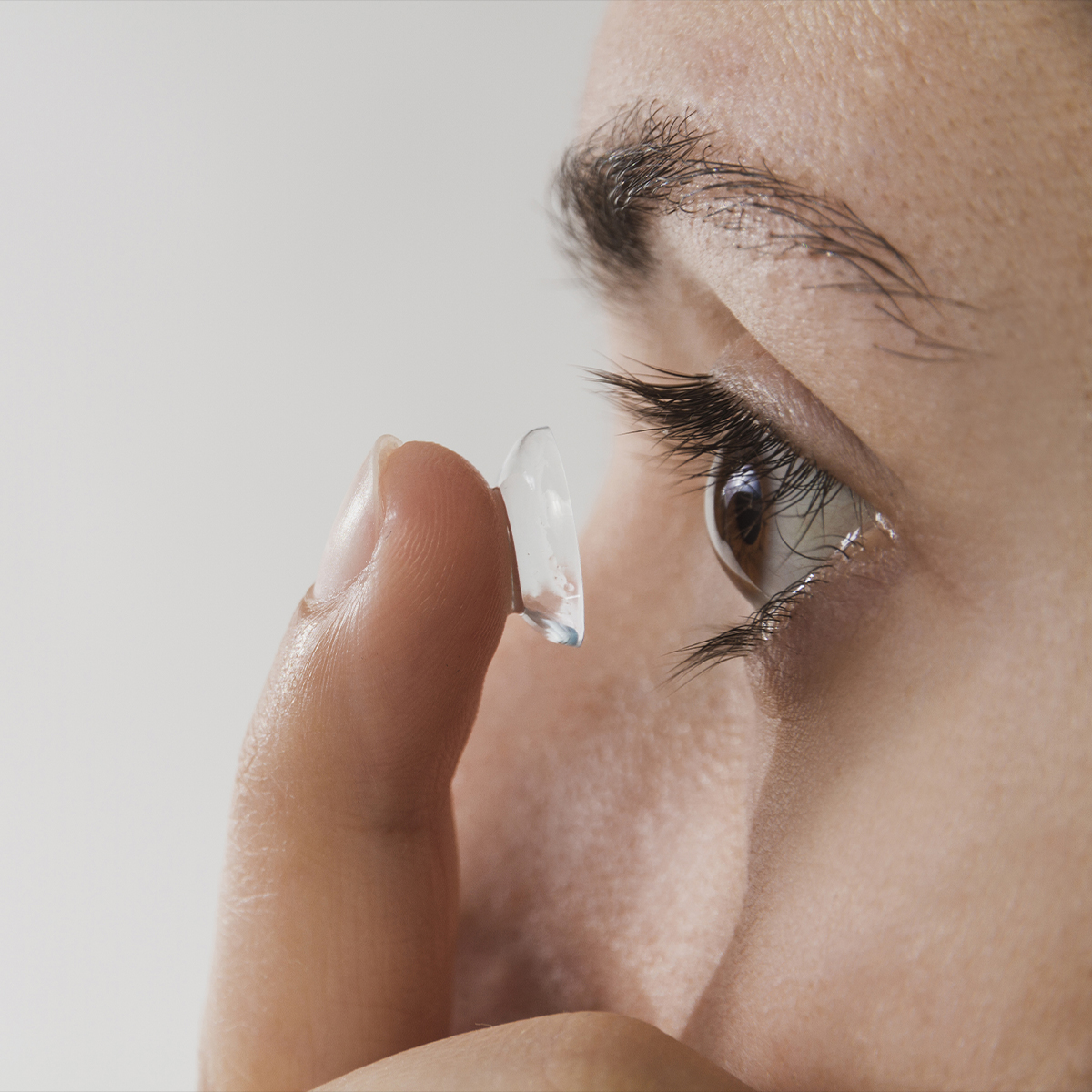
Not everyone who reaches presbyopia wants to put glasses on their face. The reasons are numerous: people think this makes them look older, they’re frustrated by the need to use their head to aim for sweet spots, or they simply can’t be bothered to constantly take them on and off. In some cases, the glasses can clash with their workflow (e.g., people whose jobs require them to wear protective visors). If you have worn contact lenses, or you just like the idea of seeing your own face in the mirror without frames, the good news is that contact lenses for presbyopia are a real option. The slightly confusing news is that they come in two very different flavours, monovision and multifocal, and which one suits you depends on how (or if) your brain handles a compromise. This guide explains how each works, who each suits, and outlines the trade-offs, so you can have a useful conversation at your next fitting rather than just taking whatever the box says.
Why contacts are an option for presbyopia
First, the quick recap of what we are solving. After your mid-40s the lens inside your eye stiffens and can no longer change its own focusing power, a near-universal change called presbyopia.[1] A contact lens, like a pair of glasses, adds back the close-up power your eye has lost. The wrinkle is the same one that makes presbyopia awkward to correct in glasses: a contact lens has a fixed power, but presbyopia needs different power for near and far. You cannot put a top-and-bottom progressive corridor on a lens that floats on your eye and rotates as you blink, so contacts solve the problem in two other ways. Monovision splits the job between your two eyes. Multifocal lenses blend several powers into each lens. Both are clever, and both ask you to give something up.
Monovision: one eye near, one eye far
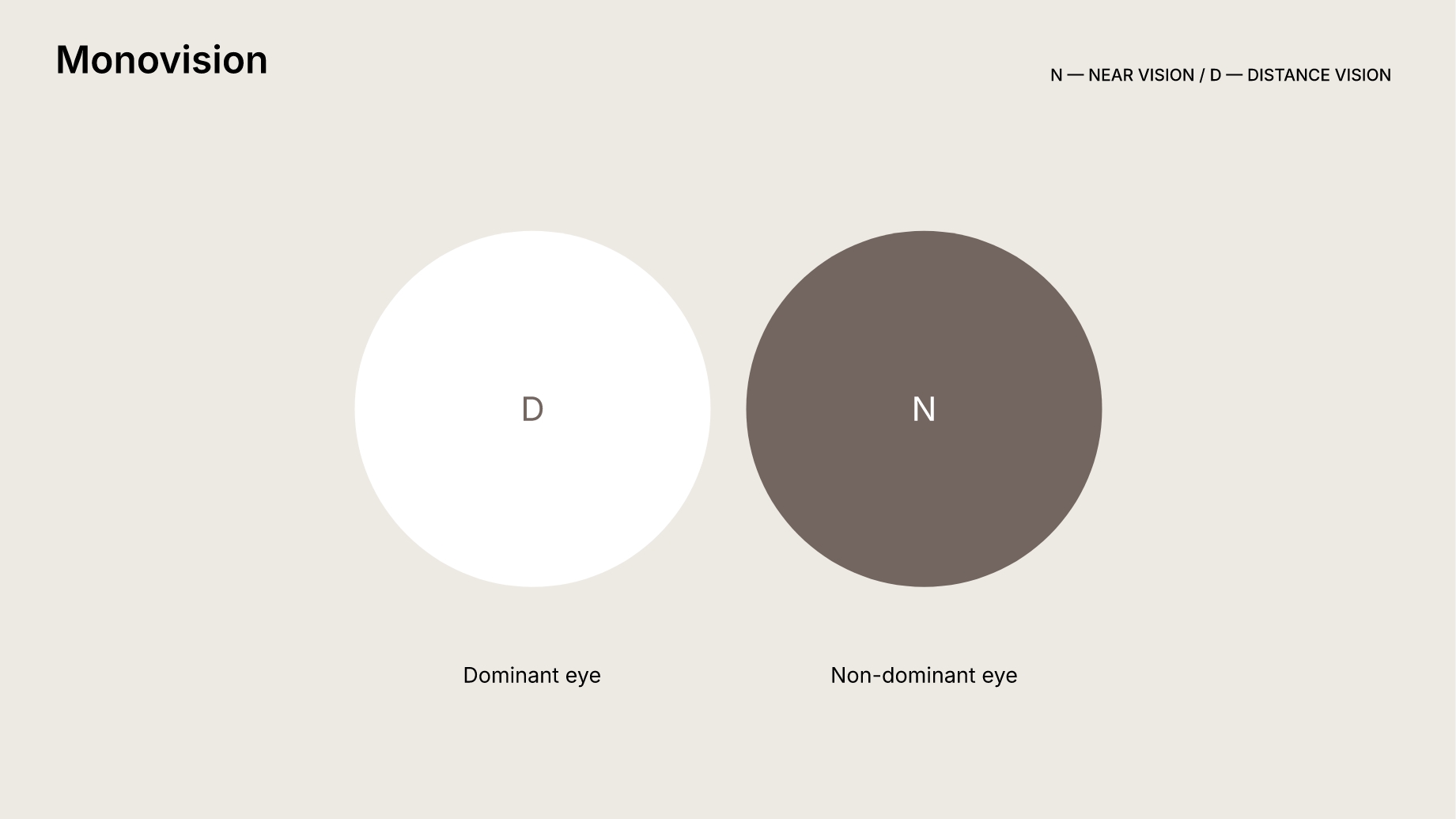
Monovision is the lower-tech approach, and for some people it works beautifully. Your eye doctor corrects your dominant eye for distance and your non-dominant eye for near, usually with two ordinary single-vision contacts of different powers. Your brain then learns to pay attention to whichever eye is in focus for the task in front of you, and to quietly ignore the blur from the other.[2]
The appeal is simplicity and sharpness: each eye sees its own distance with a clean single-vision lens, so there is no blending or haze. The cost is binocular vision. Because your two eyes are no longer focused together, you give up some depth perception and fine stereo vision, which can matter for driving at night, sports, or any task where judging distance and speed counts.[2] Monovision tends to work best at lower reading-add powers, when the gap between your two eyes is small; as your near needs grow over the years, the mismatch widens and the compromise gets harder to ignore. Some brains adapt to it within days and never look back; others never make peace with it.
Multifocal contacts: every distance in one lens
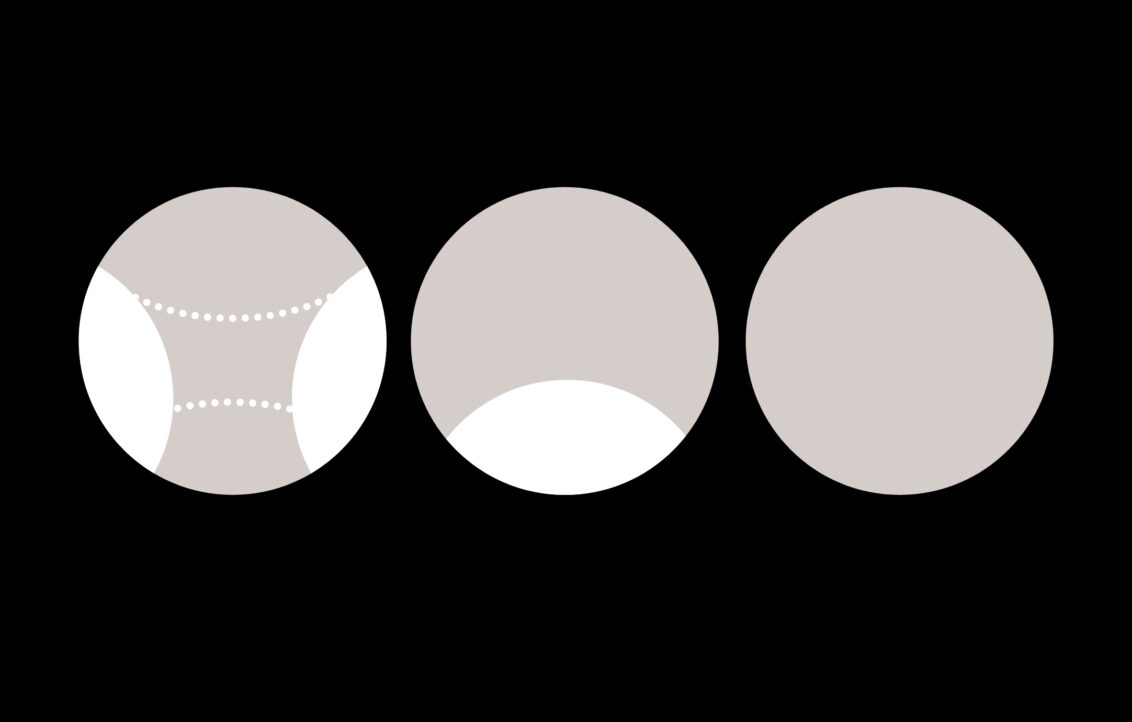
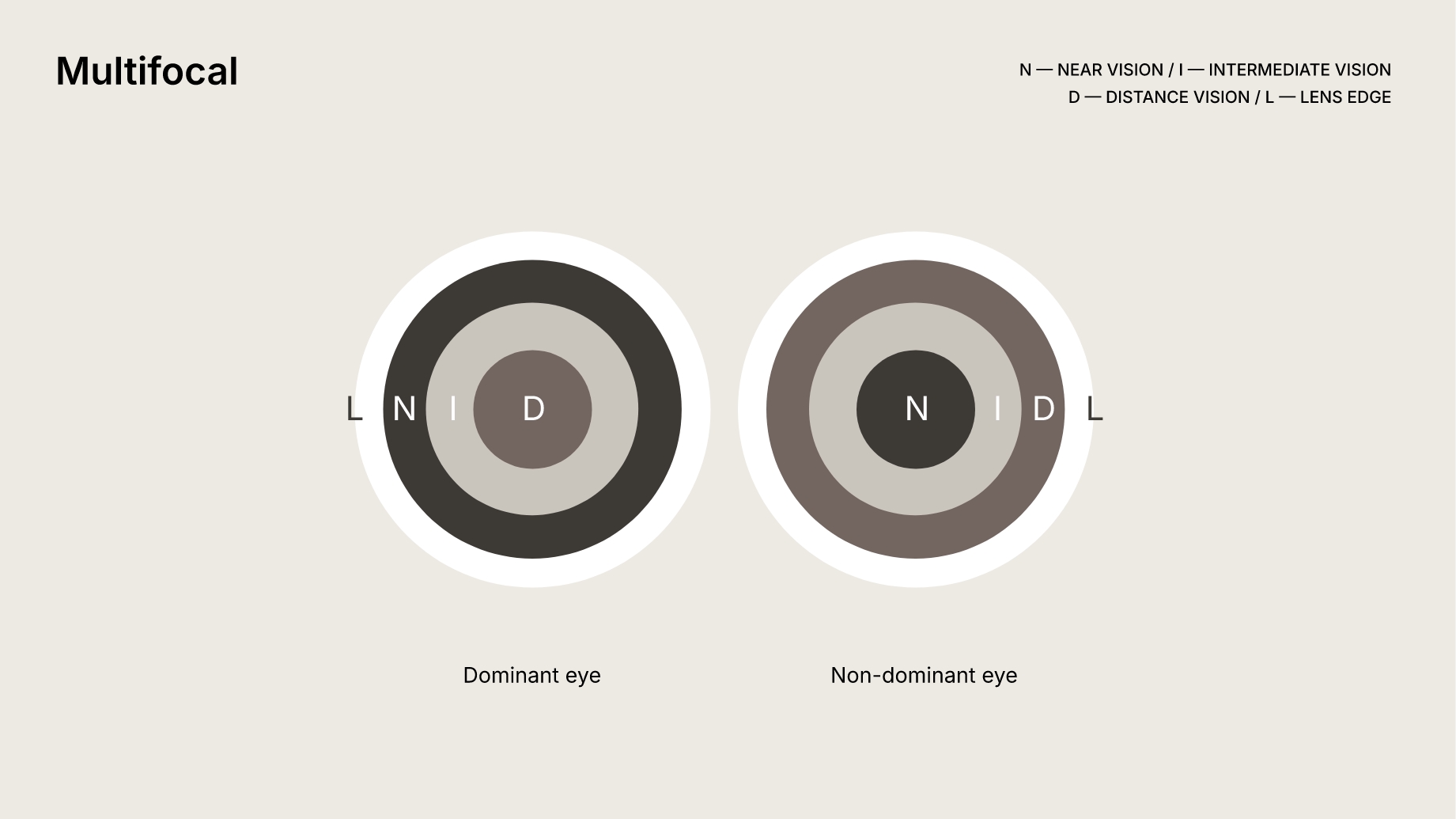
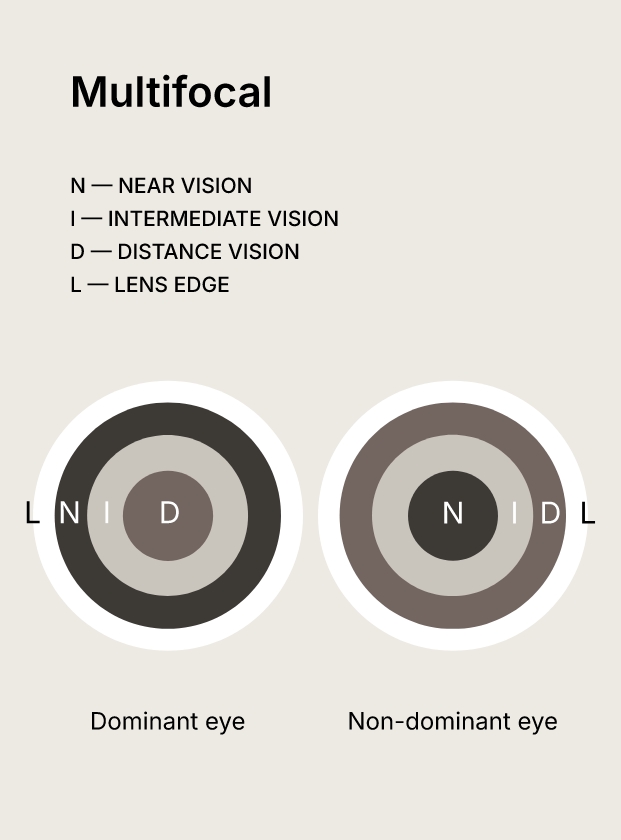
Multifocal contact lenses take the opposite approach. Instead of dividing the work between your eyes, each lens carries several powers at once, usually in concentric rings or zones that step from distance to near. Both of your eyes keep working together, and your brain learns to select the part of the image that is in focus for whatever you are looking at, much as it does with a multifocal lens of any kind.[2]
The advantage is that you keep stereo vision and handle the constant phone-to-laptop-to-room shuffle more gracefully than monovision allows. In head-to-head studies, somewhere between 51 and 76% of wearers preferred multifocals to monovision, largely for that preserved depth perception and smoother all-distance vision.[3] The trade-off is a slight, ever-present softening of sharpness and contrast, because each eye is always looking through a blend of powers rather than one clean focus.[2] Multifocal lenses also cost more than single-vision contacts and take more skill to fit well, so expect a fitting process rather than an off-the-shelf purchase.
Monovision vs multifocal: how to choose
| Monovision | Multifocal contacts | |
|---|---|---|
| How it works | One eye set for distance, one for near | Several power zones in each lens, used together |
| Depth perception | Reduced (eyes focus separately) | Largely preserved (eyes work together) |
| Sharpness | Crisp single-vision in each eye at a fixed distance | Slightly softer; constant blend of powers |
| Best for | Lower add powers, simple needs | Constant near-far switching, all-day wear |
| Cost & fitting | Lower; simpler fit | Higher; more involved fitting |
| Preference in studies | Less often preferred | Preferred by ~51–76% of wearers |
The short version: if your reading needs are still modest and you value crisp, simple vision, monovision is worth trialing. If you switch constantly between near and far all day and want to keep your depth perception, multifocals are usually the better starting point, which is why most wearers in studies prefer them. But preference is personal, and the only way to know how your brain reacts is to try.
Trialing before you commit
This is the single most useful thing to know about contacts for presbyopia: you do not have to guess. Both approaches depend heavily on how your particular brain adapts, and reputable clinics will let you trial lenses for a week or two before you buy a supply. Wear them through your real life, not just the exam room: drive, cook, work at your screen, read in bed, and notice where they perform well and where they frustrate you. Many people who assume they will hate monovision are pleasantly surprised, and many who expect multifocals to be perfect discover the contrast trade-off bothers them more than they expected. A trial turns an expensive gamble into an informed choice.
When glasses still win
Contacts are not automatically better than glasses, and it is worth being clear about when they are not the answer. If you have significant astigmatism, very high reading-add needs, or dry eyes, contacts can be harder to fit and less comfortable, and glasses may simply give you sharper, easier vision. Plenty of people also use a hybrid approach, wearing multifocal contacts most of the time and keeping a pair of glasses for night driving or long reading sessions. The point of presbyopia correction is not loyalty to one format; it is matching the tool to the moment.
It is also worth naming the deeper pattern, because it is the same one that runs through every presbyopia option. A contact lens, like a progressive, has its focusing power frozen into a fixed shape. That is why correcting presbyopia with contacts means either splitting your two eyes apart or blending compromised powers into each lens; the lens cannot change its power as you look from near to far. Contacts move the compromise from your nose to the surface of your eye, but they do not remove it. The only thing that would remove it is a lens that changes its own power on demand, which is exactly the gap that adaptive autofocus eyewear is trying to fill.