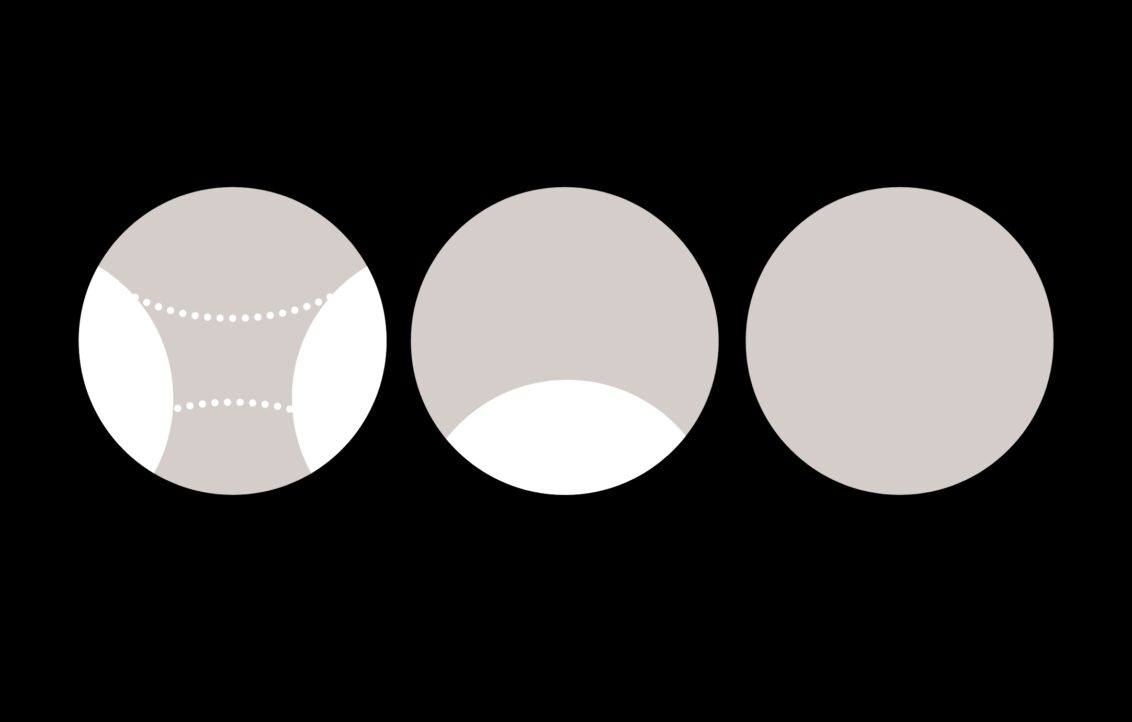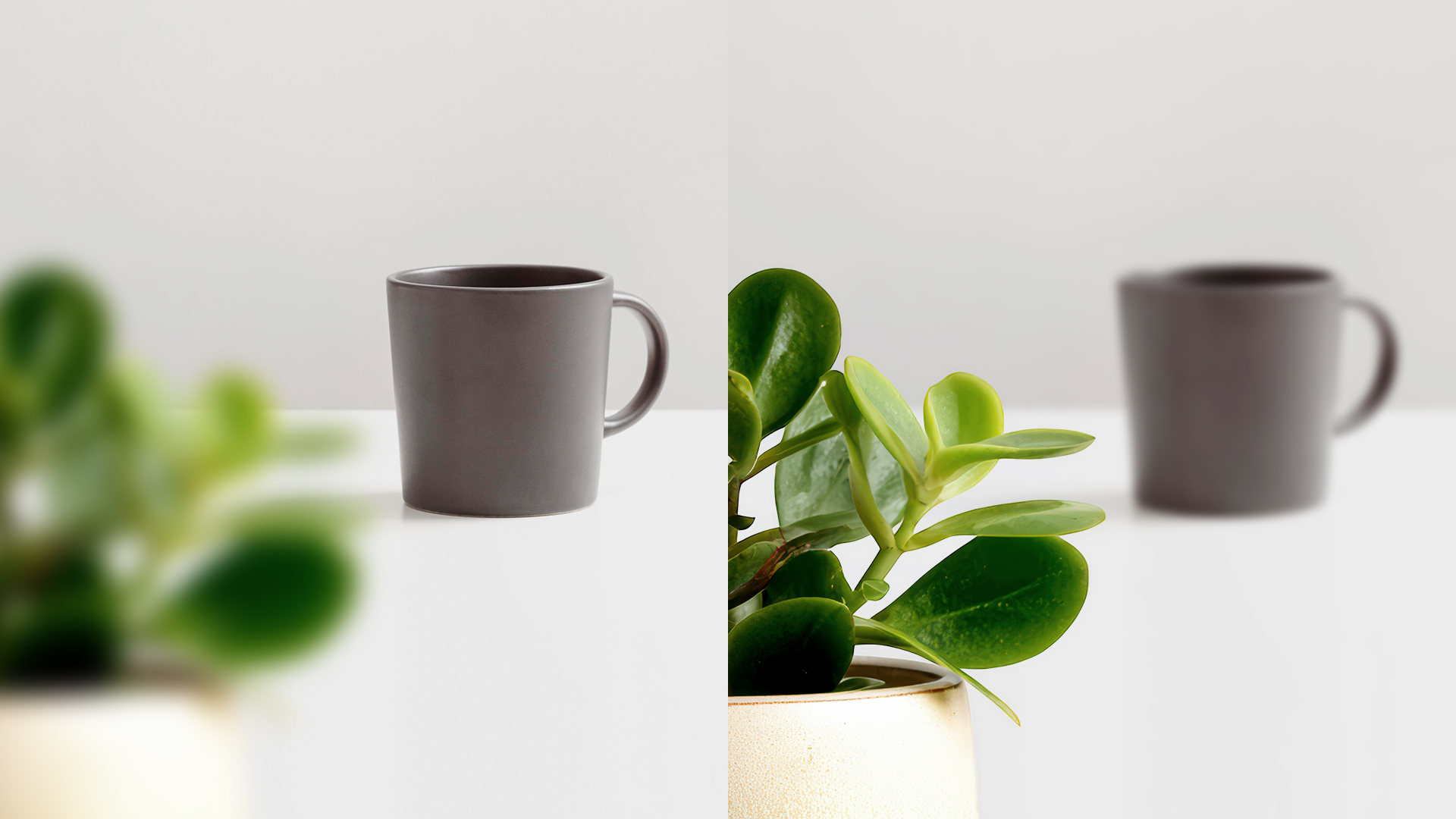

Think about the small choreography your eyes now demand. Putting your readers on for the book, taking them off for the TV. Squinting over the top of the frames to recognize someone across the room. The pat-down for the pair you set down somewhere, the spare stashed in the car (or around the house in every room, the way my dear mom does it), the cord around the neck you swore you’d never wear. None of it is a catastrophe, but it’s a steady tax on your attention, and it’s paid all day, every day. The obvious wish is simple: one pair of glasses that just works, near, intermediate, and far, without the swapping. But is that finally possible? Let’s look honestly at where things stand.
Why one pair has always meant compromise
The reason you juggle glasses at all is that your eye’s lens has stiffened with age and can no longer change its own focusing power, a near-universal change called presbyopia.[1] Every solution so far has tried to fake that lost ability with fixed pieces of glass, and every single one has charged a price for it.
Reading glasses give you one distance and blur the rest. Bifocals, Benjamin Franklin’s idea, split the lens into a near zone and a far zone with a visible line and a disorienting jump where they meet. Progressive lenses smooth that line away into a continuous gradient, which sounds like the answer until you learn that the smooth transition forces blur into the sides of the lens, leaving only a narrow clear corridor and that woozy swim when you turn your head.[2] The pattern is consistent: because the focusing power is frozen into the glass, the lens has to divide up your vision and make you aim your gaze at the right patch. A truly single pair for everything would have to do something none of these can: change its own power, on demand, the way your young eye used to.
What self-adjusting glasses for multiple distance vision would require
Strip the problem to its essentials and you need two things. First, the glasses must know at what exact distance you’re trying to look at, near, mid, or far, which means sensing either where your eyes are pointed or how far away the object is. Second, the lens itself has to be able to physically change its focusing power in response. This change must happen smoothly and fast so that it feels as effortless and natural to you as it did decades ago. Get both, and a single lens could simply become the right power for whatever you’re looking at, no corridor, no head-aiming, no second pair. That’s the whole idea behind autofocusing or adaptive eyewear. The interesting news is that neither piece is science fiction anymore.
Where it stands in 2026
The concept is no longer science fiction. Stanford researchers proved it in 2019 with “autofocals” that paired fluid-filled lenses with eye-tracking and a depth sensor; across 19 users the prototype delivered better acuity and faster, more accurate refocusing than progressives.[3] The catch was the hardware: a head-mounted lab rig, not something you would wear to dinner.
Since then the work has been shrinking that idea into everyday eyewear. A swipe-to-focus adaptive sunglass has already shipped, and several companies are racing to build automatic, normal-looking pairs that refocus on their own. We compare the actual products, who makes them, and what they cost in our landscape guide, Autofocus glasses in 2026: are they real, and how do the options compare?, which will be published in a few weeks. The short version: the technology that could retire your second pair exists and works, while the fully automatic everyday version is still in late development.
So, is it possible today?
As a matter of science, yes: adaptive focus has been built at a prototype level and shown to outperform progressives. From that point of view, the dream of one pair that handles every distance is no longer a question of whether it can work, but of engineering and timing. As a matter of what you can walk into a shop and buy today, not quite. A swipe-to-focus adaptive sunglass exists now, and automatic, normal-looking everyday pairs are in late development with launches being targeted over the next year or two, though those dates have a habit of moving.
If you’re tired of the swapping right now, the sensible move is to optimize among today’s proven options rather than wait on a date, and keep an eye on the adaptive category as it matures. The good news is the direction of travel. For the first time, the technology that could genuinely retire your second pair of glasses isn’t a thought experiment. It’s being assembled, tested, and slowly shrunk into something you’ll eventually just put on in the morning and forget about, which is exactly what good glasses should let you do.