If you’ve just gotten your first pair of progressives and you feel slightly seasick, faintly clumsy on stairs, and convinced you’re somehow bad at wearing glasses, here’s the first thing to know: it isn’t you. The struggle is real, it’s common, and most of it traces back to physics rather than to anything you’re doing wrong. Let’s walk through what’s actually happening behind your eyes, what you can do about it today, and when the honest answer is that the lens, not the wearer, is the problem.
Common problems with progressive lenses (and their names)
That woozy feeling when you turn your head and the room seems to bend and flow is called the swim effect, and it’s well documented. Researchers describe it as a genuine self-motion illusion produced by distorted optic flow through the lens; your visual system briefly thinks you’re moving when you aren’t.[1] Then there’s the head-aiming. You’ve probably noticed you have to point your nose straight at whatever you want to read, because the sharp zone is a narrow vertical strip and the edges are soft. Tilt down for stairs and they can look warped or closer than they are. Glance sideways and text smears. None of this is a sign that your eyes are failing or that you lack the knack. It’s baked into the lens.
Why it happens: a compromise built into the glass
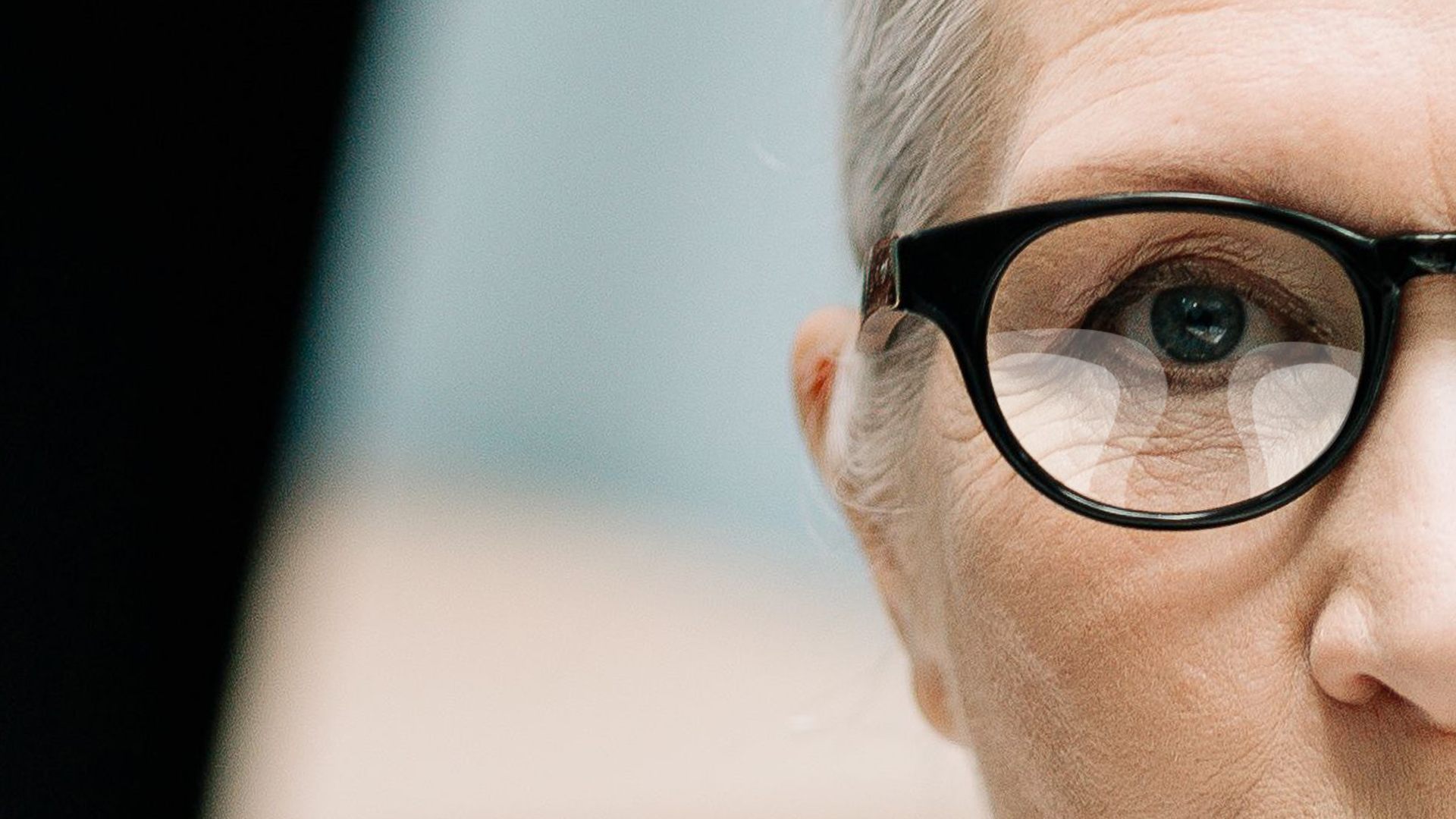
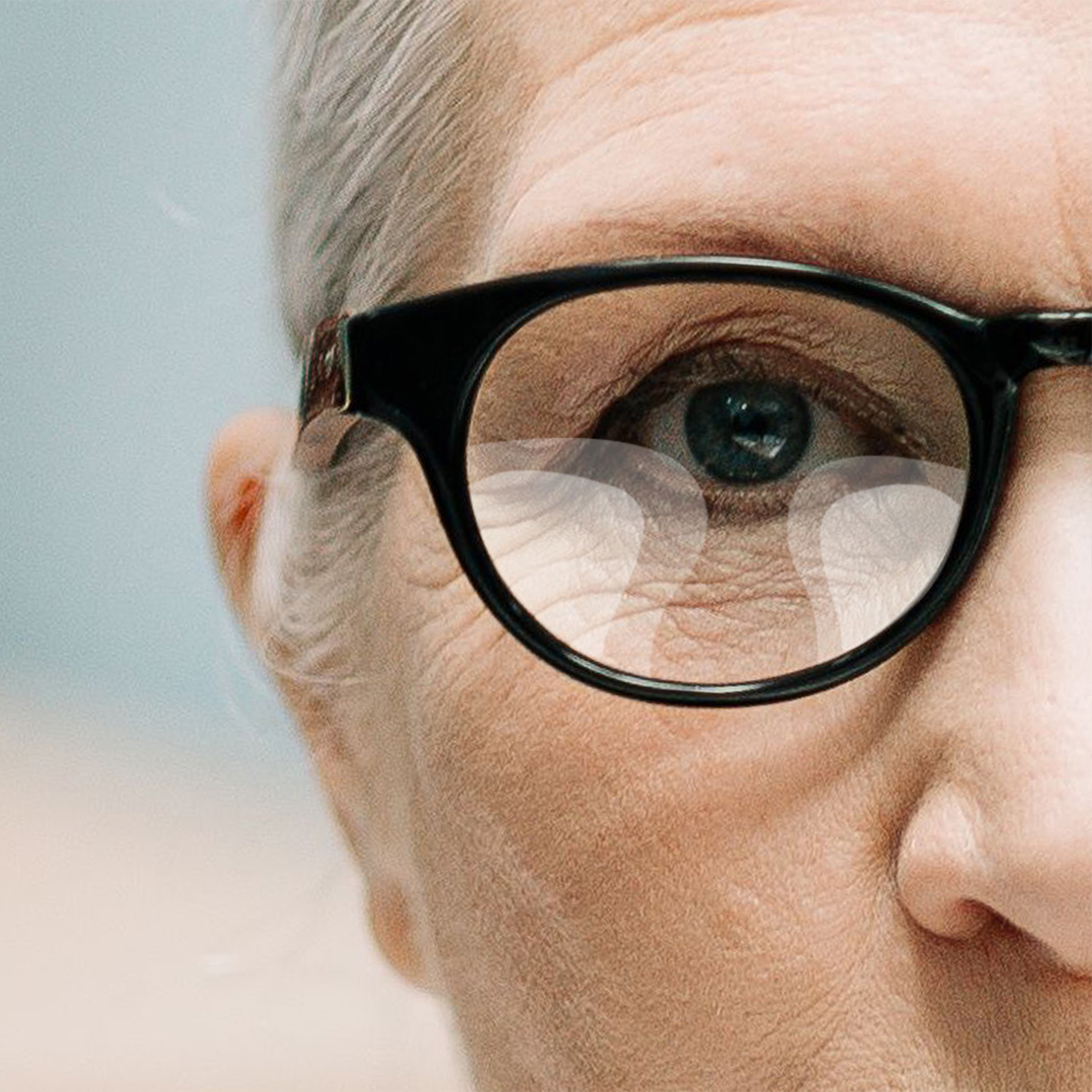
A progressive lens has to do something genuinely hard. It packs a smoothly increasing focusing power into one piece of glass, strong at the bottom for reading, weaker at the top for distance, with no visible line. The catch is a piece of optical math called the Minkwitz theorem, which proves you cannot create that smooth top-to-bottom change in power without dumping unwanted astigmatism into the sides of the lens.[2] In plain terms: the price of a clear vertical corridor is blur and distortion on either side of it. There is no lens design that escapes this; designers can only shuffle the distortion around, making the corridor a little wider here at the cost of more swim there. So when you sense that only a slim channel is truly crisp, you’re perceiving the lens exactly as it is.
There’s a second culprit behind the warping stairs. Changing focusing power also subtly changes magnification, so the bottom of the lens magnifies a touch more than the top. Straight lines pick up a gentle curve and the ground seems to shift as your gaze travels down the lens. Your brain can learn to ignore most of this, which is exactly what “adapting” means, but it takes time and the effect never fully disappears.
How to get used to progressive lenses
Start with time, because it’s free and it’s the most common fix. Most first-time wearers settle in within about 10 to 14 days, and the single biggest mistake is switching back to old glasses whenever things feel awkward. That gives your brain two visual worlds to juggle and resets the clock. Wear the new pair consistently, all day, and let your visual system commit.[3]
If two weeks pass and it’s still rough, suspect the fit before you blame yourself. Progressives are unforgiving of small errors, and a surprising share of “non-adapt” cases are really fitting problems in disguise.[4] A few things worth checking with your optician: the fitting cross, the tiny reference mark on the lens, needs to sit right over your pupil when you look straight ahead, so if the frame has slipped down your nose or sits crooked, your sharp corridor is in the wrong place. The frame’s tilt matters too; angling the bottom of the frame in toward your cheeks by roughly 8 to 12 degrees brings the reading zone into your natural downward gaze.[4] And the frame itself can be the problem: a short frame leaves too little vertical room for the corridor, cramming distance, intermediate, and near into a few millimeters and making every zone feel tiny. If you picked a fashionably shallow frame, a taller one can transform the experience.
Be specific when you go back. “I can’t see” is hard to act on; “the sweet spot for my computer is too low and I have to lift my chin all day” points straight at a fix. Opticians can adjust the frame, re-measure, and remake the lens, and small tweaks to where the corridor lands often solve what felt like a hopeless mismatch.
When it’s the technology, not you
Sometimes you do everything right, the fit is perfect, you give it a fair month, and your brain simply refuses to make peace with the swim. That’s a real category. Roughly 2 to 5% of people never adapt to progressives even in well-fitted lenses, and being in that group says nothing about you.[3] If that’s where you land, you have options and you shouldn’t keep suffering. Many practices will remake progressives into single-vision, bifocal, or trifocal lenses, often at no extra cost within about 30 days, so ask about the non-adapt policy before you assume you’re stuck.[5]
It’s worth stepping back to see why this compromise exists at all. The corridor, the swim, the head-aiming, they’re all symptoms of one root constraint: the focusing power is frozen into the glass, so the lens has no choice but to carve your field of view into zones and force you to look through the right one. The newest approach attacks that root. Adaptive, or autofocus, lenses change their power electronically on the fly, which in principle removes the need to trade a clear center for blurry edges, since the whole lens can simply become the right power for wherever you’re looking. The technology is still early, with limited availability and high prices, so it’s a direction to watch rather than today’s answer. But it’s a useful reminder that the difficulty you’re feeling isn’t a personal failing. It’s the limit of a clever but fundamentally compromised piece of glass.
So give your progressives a real two weeks, get the fit checked carefully, and speak up with specifics. Most people cross over to comfort. And if you’re one of the few who don’t, that’s information, not failure, and there’s a clear path to vision that works for you.